
Portage City Directory Holdings
The Kalamazoo Public Library city-directory collection is the central shelf for a Portage city directory search. KPL identifies 1860 as the first Kalamazoo directory and says it owns every published directory it has located, though that does not mean every year survives. The main series is cataloged as H 917.7417 K14. Portage is not represented by one uninterrupted city series: county, suburban, and rural volumes each matter depending on the place and date.
| Directory group | Documented years | Holding location | Research access |
|---|---|---|---|
| Kalamazoo city-directory series | First issue 1860; holdings have gaps | KPL Local History | Cataloged print collection, H 917.7417 K14 |
| County and suburban directories | County through 1919; suburban 1966-1976; regular series from 1977 | KPL Local History | Suburban collection, H 917.7417 K141 |
| Rural directories | 1919, 1926, and 1969/70 | KPL Local History | Separate rural titles |
| Telephone and criss-cross volumes | Telephone from 1913; broad telephone coverage from 1949; criss-cross from 1954 | KPL Local History | Print and local-history use |
The KPL City Directories collection page is the starting catalog for the holdings and their organization.
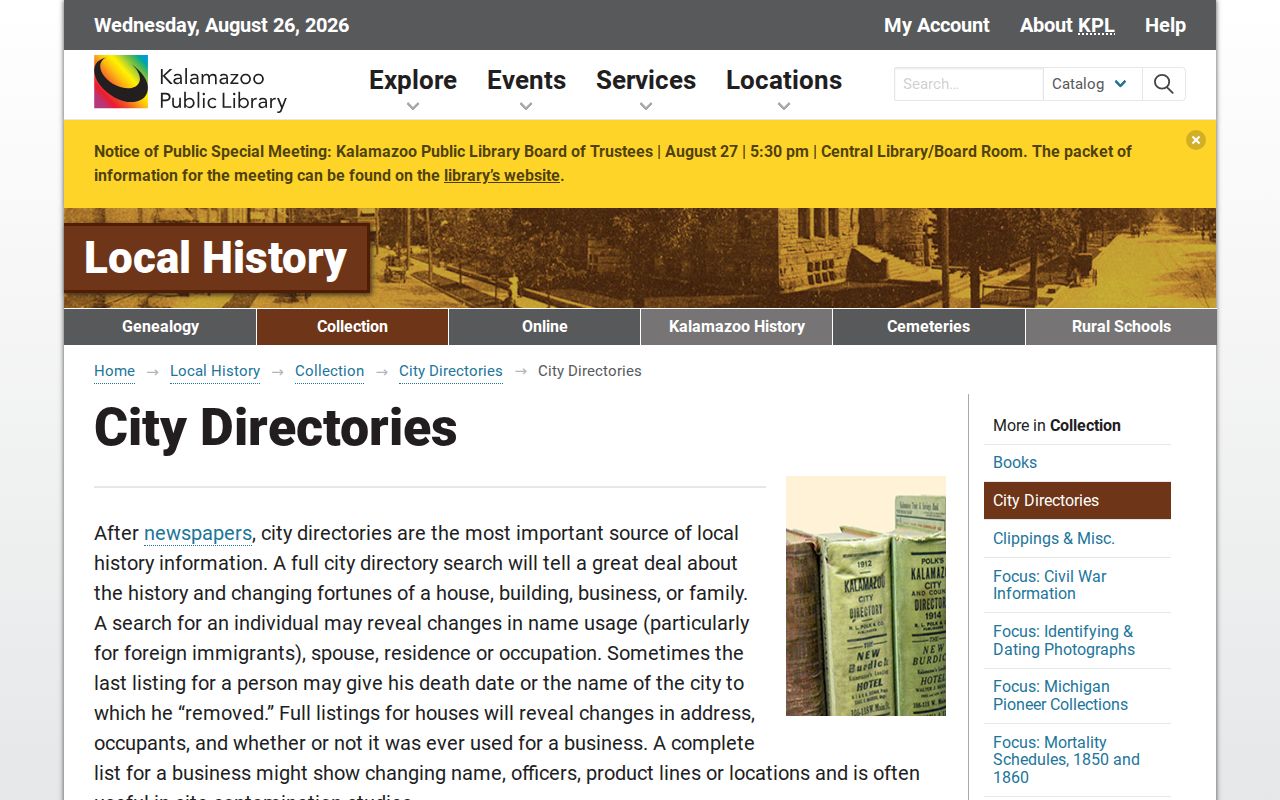
The KPL collection is the best first stop for confirming whether a city, suburban, rural, telephone, or street-order volume fits the time and place being researched.
The last directory covering the entire county is 1919. Suburban issues cover 1966 through 1976, then join the regular run in 1977, but they do not cover rural areas. KPL lists the 1919 Rural Directory, the 1926 Kalamazoo & Van Buren Rural Route Directory, and the 1969/70 Official Rural Farm Directory as separate tools. Check the collection type before treating a missing person as a missing resident.
Note: A missing year or rural address can reflect the collection boundary rather than a family move.
Portage City Directories Across Jurisdictions
Older Portage research can be filed under Portage Township, Kalamazoo, a county directory, or a rural route instead of the current city label. Portage incorporated in December 1963, and its charter follows the organized Portage Township footprint as it existed that February, with later annexations and detachments. That history makes the county and suburban directory series especially useful when a modern Portage search does not locate a household.
The digitized 1869 Kalamazoo County directory and history is an online starting point for early county context and Portage references. It should be read as a historical volume, not as proof of a complete Portage household list.
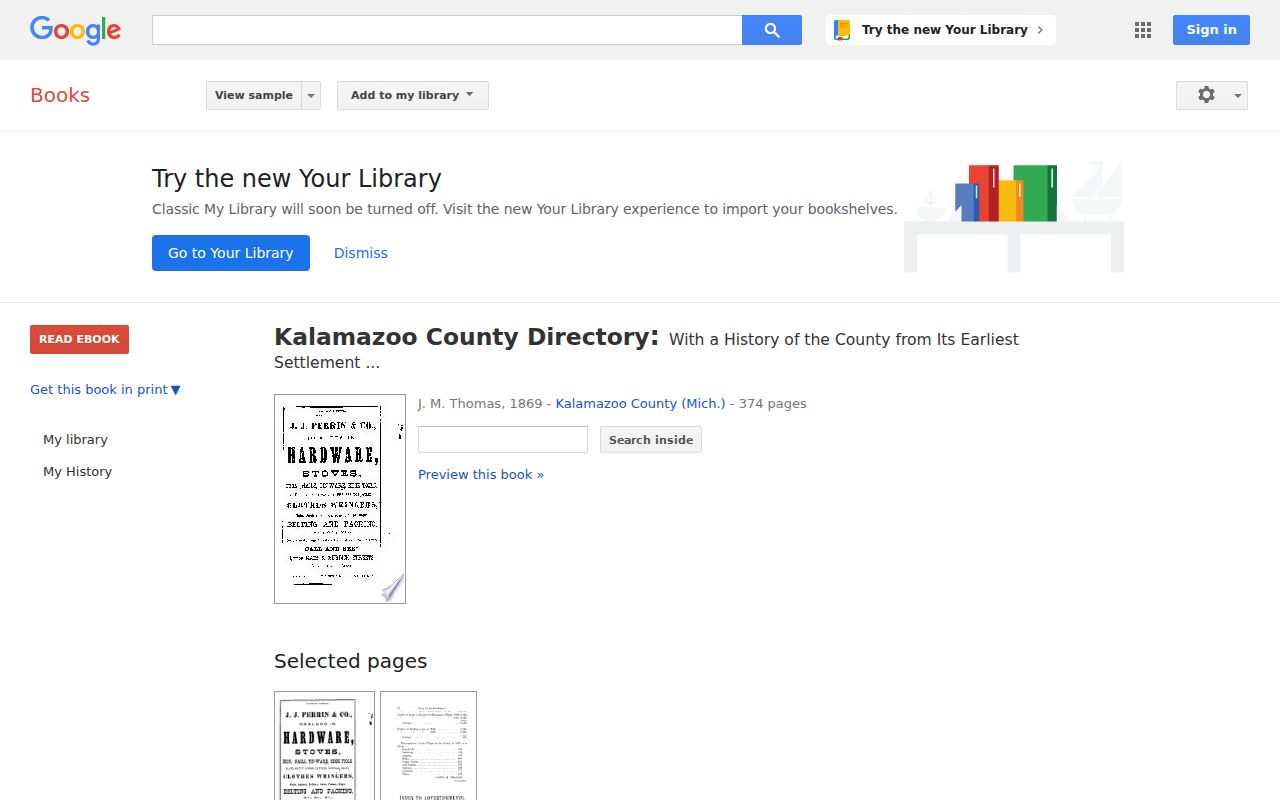
The digitized title demonstrates why early research may begin with a county-scale source before later city and suburban directory runs become the better fit.
Portage City Directory Numbering Break
KPL notes an important address trap: no 1925 Kalamazoo directory was published because a citywide renumbering occurred. Compare the 1924 and 1926 volumes instead of assuming the gap means a house or family disappeared. The 1932 Sanborn material records old and new house numbers, making it a useful bridge when the same building seems to have changed addresses.
Street-name variants need the same care. KPL identifies Cork as former St. James, Michigan Avenue as former Main, Oakland as former Asylum, and Westnedge as West Street in parts of the older system. Search both names where the period allows it. A historical street label is a search term, not proof that the street or city boundary was unchanged.
Note: The 1924, 1926, and 1932 sources work together because each answers a different numbering question.
How Portage City Directory Entries Read
A city directory is not a uniform form. KPL documents alphabetical resident lists, street-order lists, business sections, county sections, and introductory lists of institutions and organizations. Street order begins in 1897; older volumes often place it near the front, while 1920s volumes commonly place it at the back. No page-level entry was captured during the source review, so the inventory below identifies documented features rather than inventing a sample resident.
| Alphabetical listing | Finds a person or household by name when the volume includes resident listings. |
|---|---|
| Street-order listing | Groups addresses along a street, useful for a Portage city directory address trail from 1897 onward. |
| Wife in parentheses | KPL notes this convention begins in 1901 and can provide a family-name clue. |
| bds and lab | KPL defines them as “boards at” and “laborer,” respectively. |
| Bresser street order | May show a head of household, telephone, owner or occupancy description, first-listed year, new arrival, and relocation. |
- Criss-cross directory
- An address or telephone-order directory that can lead from a location to a surname.
- Householder listing
- A name-first resident listing used to place a household in a particular volume year.
- Abbreviation key
- The part of a volume that explains terms such as bds and lab; preserve it with research notes.
Adult children may appear as boarders at age 18, and women may vanish from a name search after marriage before reappearing under a maiden name. Those are prompts to test alternate names and volumes, not conclusions about a person’s residence.
Portage City Directory Phone Trails
Telephone books and criss-cross volumes fill a different role from a name-first city directory. KPL’s oldest telephone directory is from 1913, with reliable complete coverage beginning in 1949. Its oldest criss-cross directory is from 1954, and Bresser volumes appear in the 1970s. Because criss-cross listings are arranged by address or telephone order and extend beyond Kalamazoo city and county, they can connect a street or number to a surname when spelling blocks an alphabetical search.
Telephone-era listings are best used to correlate a name, address, and period. They do not establish a current address. The Library of Michigan directory guide explains that Polk directories can be used by surname, street, telephone, and classified access, while Bresser adds address-order detail.
Portage Heritage Room Research
The Portage District Library provides the closest local physical research stop. Its Heritage Room holds special collections, local-history books, and archival material. Many items are room-use-only, and the Local Historian decides access to rare or fragile originals. This makes a desk inquiry or visit a real access channel, not a last resort after web searching.
The Heritage Room is at the back of the library’s main level. The library identifies Steve Rossio as Local Historian and a Local History Information Desk, while a 2026 genealogy-help event records support from Kalamazoo Valley Genealogical Society volunteers. Bring the surname variants, address forms, and years already found in city directories so staff can help choose the next shelf or collection.
Portage Regional History Sources
The Kalamazoo County Historical Society offers a public contact and program route for local-history context. Its public site did not expose a searchable holdings catalog or a resident-name index. Use it as a referral and interpretive channel, then identify record groups through KPL, the Heritage Room, WMU, or the Archives of Michigan.
The historical-society route can help frame a Portage place or organization, but it does not replace a cited directory volume or a cataloged archive.
WMU Regional History Collections at the Zhang Legacy Collections Center add letters, diaries, oral histories, photographs, public records, publications, and newspapers to a directory trail. The holdings are used on site and do not circulate; complex inquiries can go to arch-collect@wmich.edu. The Ward Morgan collection alone contains nearly 27,000 negatives from 1939 to 1980.
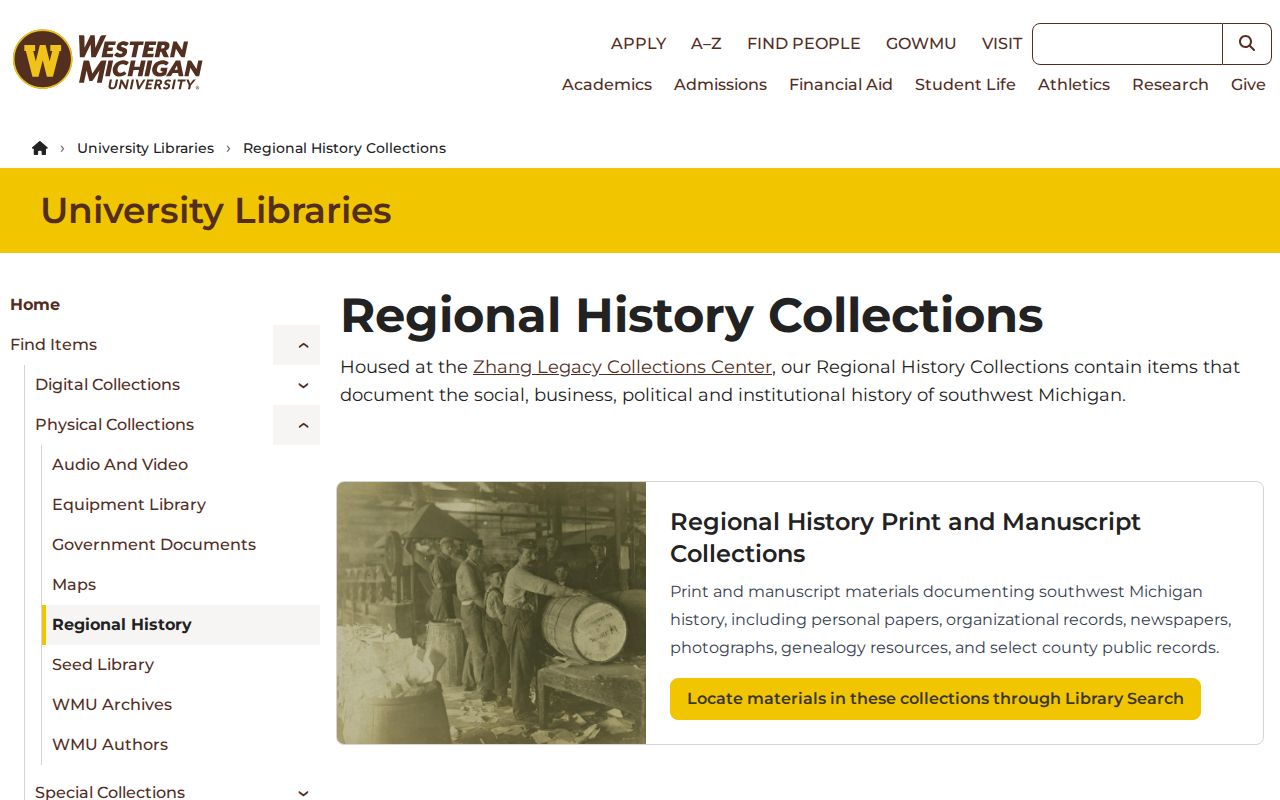
WMU material can supply context for a name or address found in a Portage city directory, especially where a photograph, organization file, or newspaper run survives outside the printed volumes.
Tracing Portage City Directory Households
Use a year-by-year sequence rather than one isolated hit. KPL also preserves federal census microfilm for 1820 through 1930, Soundex for 1880 through 1920, Gazette microfilm, clippings, Sanborn maps, and older deed material. A directory date can therefore be paired with a household source, an address tool, or a notice in the local paper. For a present-day identity question after the historical trail ends, use the Portage resident lookup route rather than treating an old listing as current information.
- Locate the surname in the earliest relevant directory volume and record the exact year, spelling, address, and listing type.
- Follow the name forward through the next available volumes, noting address moves and any alternate surname.
- Turn to the street-order or criss-cross section when an address appears, then record nearby names separately.
- Pair the directory period with the nearest available census, newspaper, clipping, or map source held at KPL.
- Use obituary, cemetery, or probate material only to test a documented transition, such as a disappearance or estate connection.
A person can disappear because of a move, a name change, a gap in the collection, a rural address, or an unlisted household. Mark each possibility until another dated record resolves it. KPL’s Kalamazoo Sources list identifies both the directories and companion microfilm collections.
Portage City Directory Clipping Trails
The KPL Local Information Database links directory research to the Kalamazoo Gazette index and a local directory of more than 900 organizations. Gazette personal-name and subject indexing is complete from 1968 to the current coverage described by KPL, with stated exceptions for circuit sentencings and public notices beginning in 1984. Marriage and divorce indexing ended around October 15, 2013, while birth-announcement indexing begins January 5, 2016.
Earlier newspaper coverage has different windows: 1960 through 1967 for births, deaths, and marriages; 1940 through 1959 for weddings and obituaries; and older obituary material with gaps. KPL reports especially rich clipping files for 1928 through 1968. These date limits explain why a city directory name may need a microfilm or clipping follow-up rather than a single database query.
Note: Match a newspaper index date to the event type before treating a blank search as a missing event.